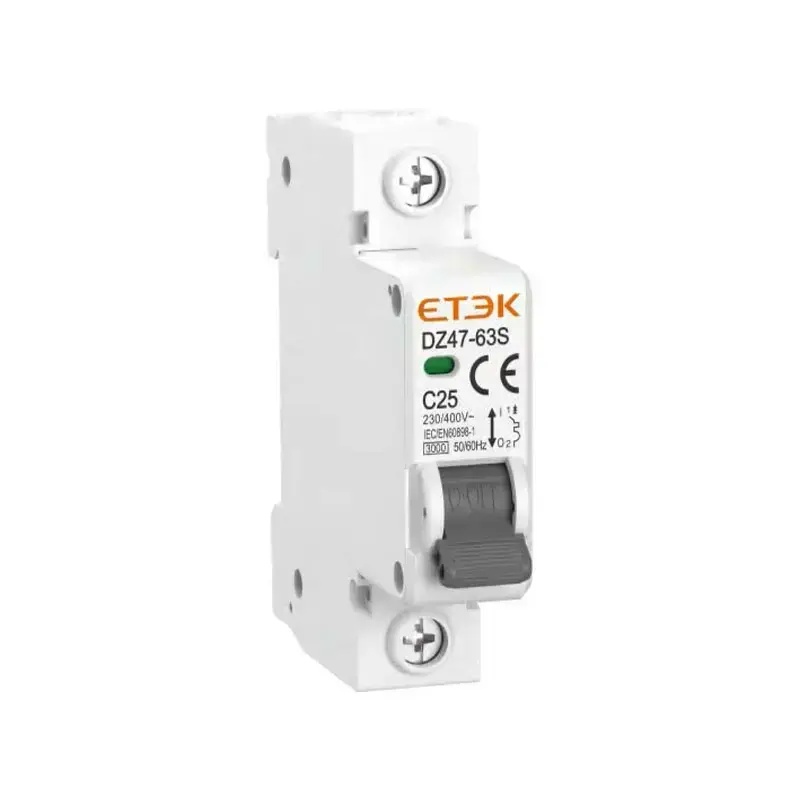
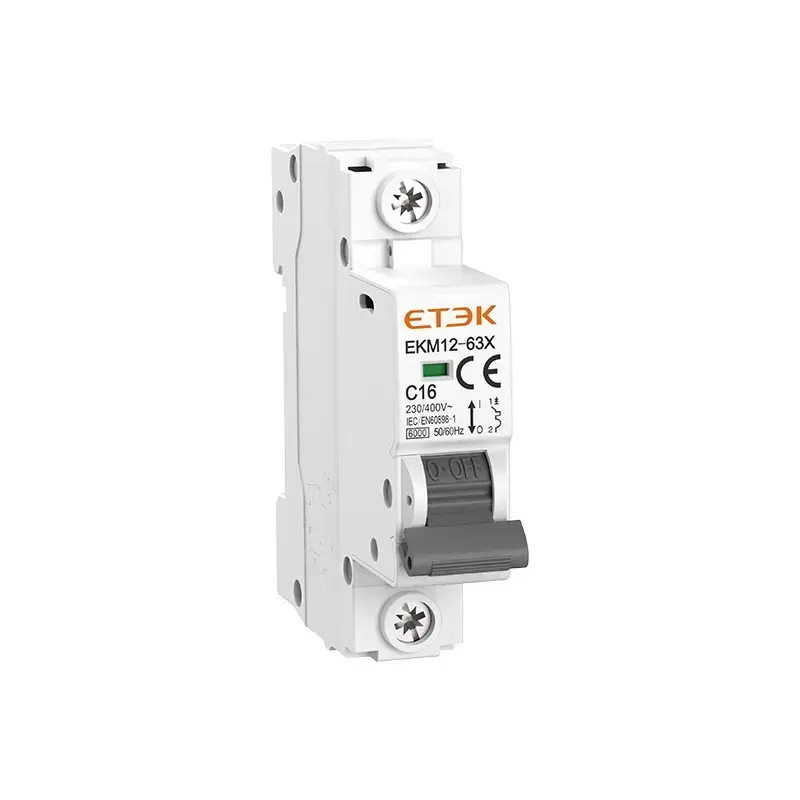
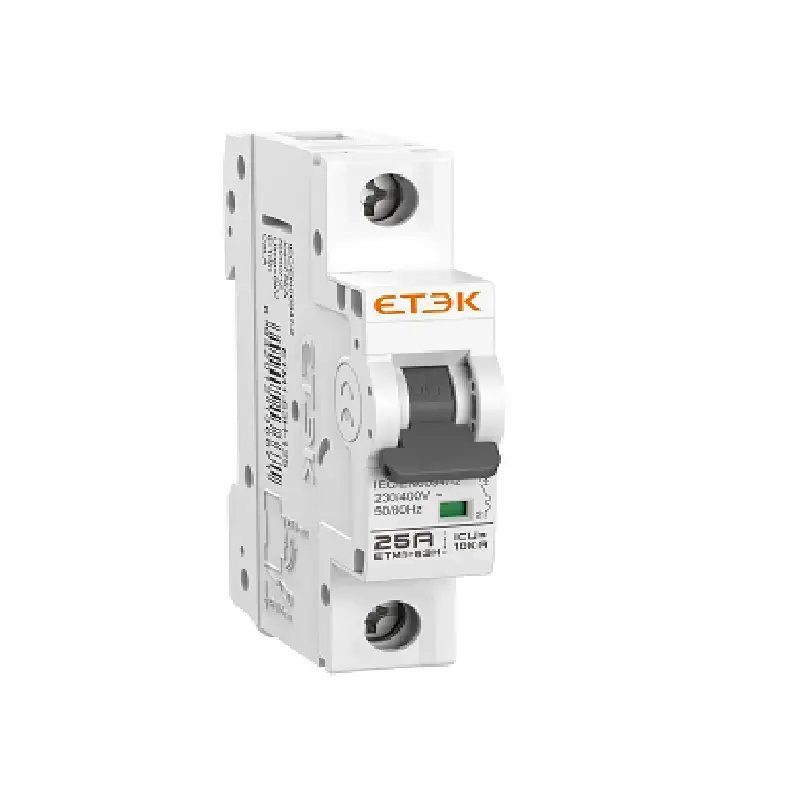
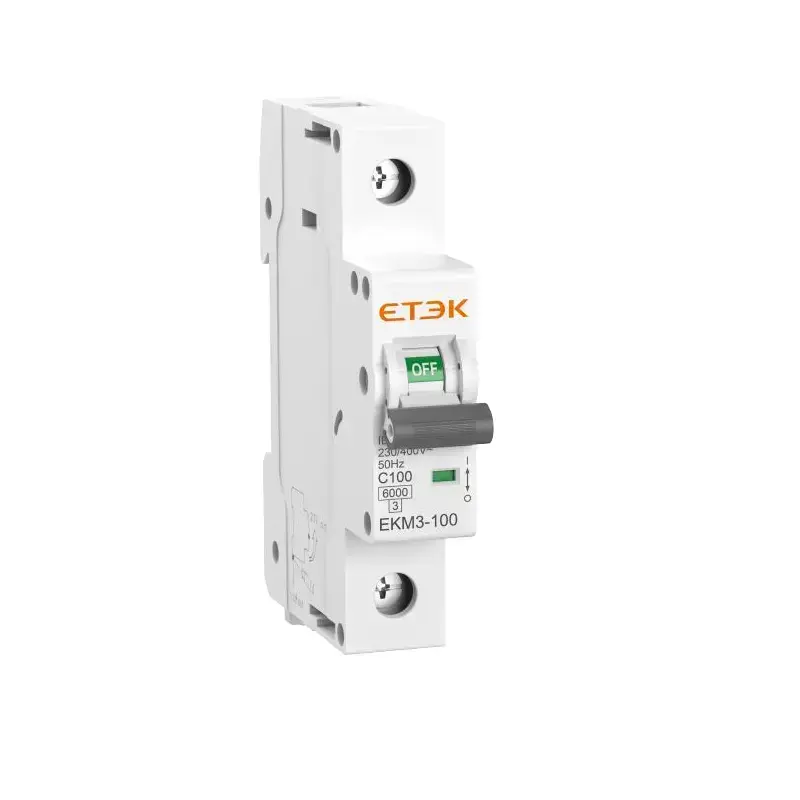
MCB Amp Rating Applications: 10A, 16A, 20A, 32A and 40A Guide

This article is an application and selection guide, not an installation instruction. Final MCB selection should be checked by a qualified electrical designer or installer against the actual load, conductor size, installation conditions, breaking capacity and applicable local standards.
What Does MCB Amp Rating Mean?
The amp rating of an MCB shows the current the breaker is designed to carry continuously under defined conditions. If the current stays above the rated value for too long, the thermal trip mechanism operates. If a short-circuit current occurs, the magnetic trip mechanism opens the circuit much faster.
This rating is not selected by load power alone. A safe selection also depends on conductor size, insulation type, ambient temperature, installation method, prospective short-circuit current, pole configuration, breaking capacity, AC/DC voltage rating and the required trip curve.
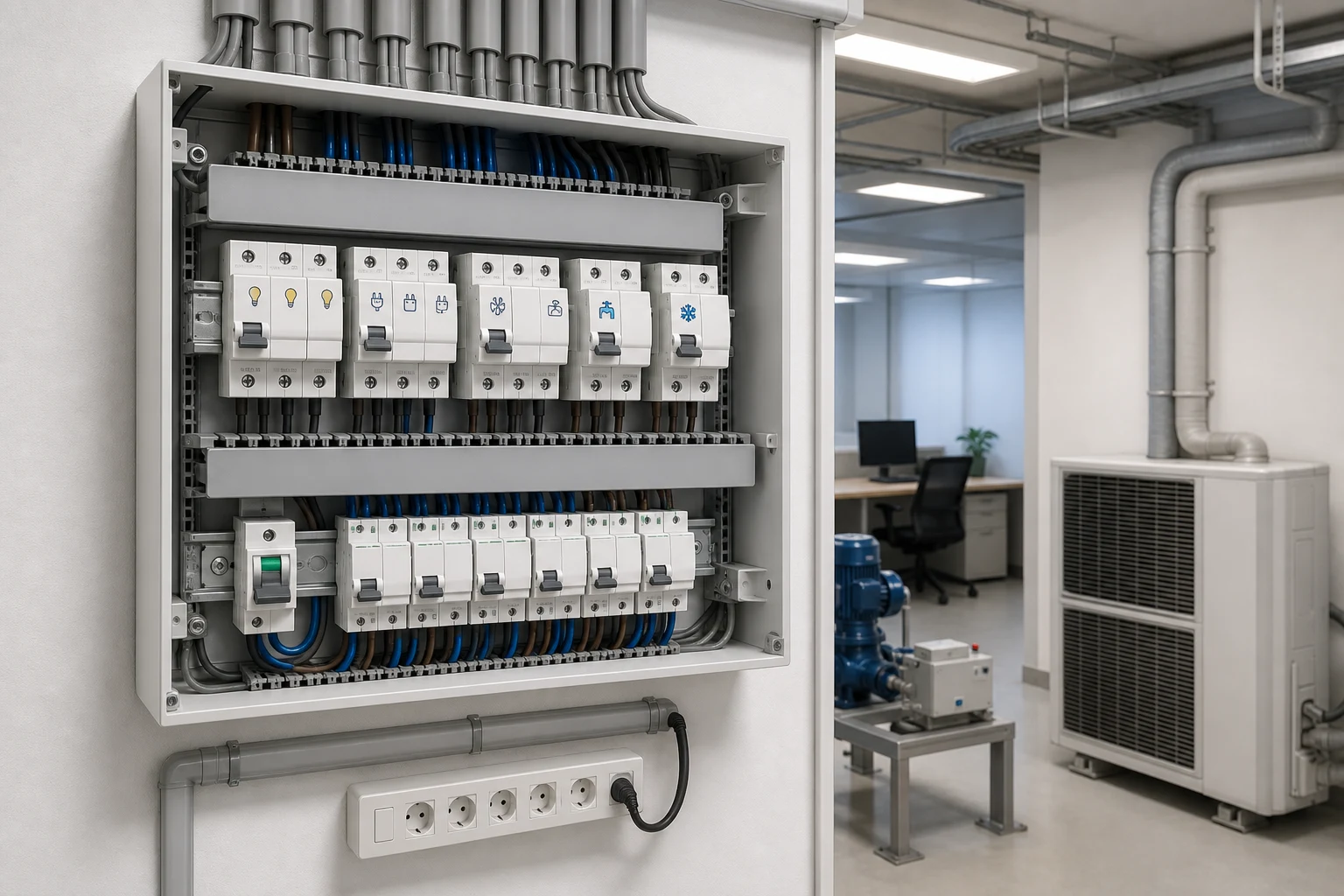
| MCB rating | Common applications | Selection notes |
|---|---|---|
| 6A | Lighting circuits, control circuits, small auxiliary loads | Often used where circuit current is low and cable size is small. |
| 10A | Lighting groups, small control panels, low-load branch circuits | Common for lighting or low-power distribution, depending on local wiring practice. |
| 16A | Socket circuits, small equipment, light commercial loads | Often used for general small power circuits where cable capacity allows. |
| 20A | Dedicated equipment circuits, small appliances, workshop loads | Useful where load current is above 16A but still within cable and code limits. |
| 25A-32A | Higher-load sockets, air-conditioning, water heaters, equipment circuits | Requires careful cable sizing and installation-condition checks. |
| 40A | Larger appliances, sub-distribution feeders, small machinery, HVAC circuits | Must coordinate with conductor size, upstream protection and fault level. |
| 50A-63A | Larger distribution circuits, equipment feeders, industrial panels | Usually selected by electrical designers according to load and system fault current. |
What Is a 10A MCB Used For?
A 10A MCB is commonly used for lighting circuits, small control circuits and low-power branch circuits. It may be suitable for groups of LED lights, control transformers, auxiliary loads or small equipment where the normal current remains well below 10A.
Before selecting a 10A MCB, check the cable size, installation method and expected inrush current. Some LED drivers and small power supplies may create short inrush currents, so the trip curve also matters.
What Are 16A and 20A MCBs Used For?
16A and 20A MCBs are often used for small power circuits, socket outlets, control panels, small machines and dedicated equipment circuits. In commercial panels, they are common ratings for branch circuits that serve office equipment, small tools, lighting control equipment or light-duty appliances.
The difference between 16A and 20A should not be decided by convenience. The cable current-carrying capacity, ambient temperature, grouping, voltage drop and local code requirements determine whether the circuit can use the higher rating. A 20A MCB can support more current than a 16A MCB, but it is only appropriate when the wiring, terminals, enclosure and load design are rated for that current.
What Is a 32A MCB Used For?
A 32A MCB is commonly used for higher-load circuits such as dedicated appliance circuits, small distribution feeders, workshop sockets, air-conditioning equipment or similar loads where the wiring is designed for that current. It is also a common rating in many distribution boards for circuits that need more capacity than standard small-power branches.
Because 32A circuits can carry significant current, the cable size and installation conditions are critical. Designers should also check breaking capacity and short-circuit coordination with upstream protection.
What Is a 40A MCB Used For?
A 40A MCB is normally used for larger loads or feeder circuits, such as sub-distribution circuits, larger appliances, HVAC equipment, water heating equipment, small machinery or charging and power equipment where the circuit is designed for 40A operation.
A 40A MCB should not be installed only because a load seems powerful. If the cable, terminals, enclosure temperature or installation method cannot support 40A safely, the breaker may fail to protect the circuit correctly. Always coordinate the MCB rating with conductor capacity, upstream protection, expected fault current and local rules.
MCB Rating vs Cable Size
The MCB protects the cable as well as the load. For that reason, the breaker rating must be equal to or lower than the current the cable can safely carry after derating factors are applied. Derating may be required for high ambient temperature, bundled cables, conduit installation, insulation type or long cable runs.
If the MCB rating is too high for the cable, the cable may overheat before the breaker trips. If the rating is too low, nuisance tripping may occur during normal operation. Proper coordination avoids both risks.
B Curve, C Curve and D Curve Selection
MCB trip curve selection depends on load inrush current. B curve MCBs are typically used for resistive or low-inrush loads. C curve MCBs are common for mixed commercial and industrial loads with moderate inrush current. D curve MCBs are used for higher-inrush loads such as transformers, motors or equipment with strong startup current.
For the same amp rating, different trip curves behave differently during startup and short-circuit conditions. A 16A C curve MCB is not the same protection choice as a 16A B curve MCB.
AC MCB vs DC MCB Rating Selection
AC and DC circuits require different interruption capability. DC current has no natural zero crossing, so DC arcs are harder to extinguish. For solar PV, battery, energy storage or other DC circuits, use a DC-rated MCB or DC circuit breaker with the correct voltage rating and wiring polarity requirements.
Do not use an AC-only MCB in a DC circuit unless the manufacturer explicitly states the product is rated for the required DC voltage and application.
How to Choose an MCB Rating
For product selection or OEM panel projects, check the complete specification instead of only the amp rating. Important parameters include rated current, pole number, rated voltage, AC or DC application, breaking capacity, trip curve, mounting method, terminal capacity and the applicable IEC or local standard.
- Calculate the normal load current.
- Confirm the conductor size and current-carrying capacity.
- Apply derating for ambient temperature, grouping and installation method.
- Choose an MCB rating that protects the cable and supports the load.
- Select B, C or D curve according to inrush current.
- Check breaking capacity against the available fault current.
- Confirm pole number, AC/DC rating and applicable standards.
For OEM panels, distribution boards or solar and DC systems, the MCB should be selected as part of the complete protection design, not as an isolated component.
FAQ
Can I replace a 16A MCB with a 20A MCB?
Only if the cable, terminals, enclosure, load and local electrical code allow the higher current. Replacing a breaker with a higher rating without checking the circuit can create overheating and fire risk.
What is a 40A MCB commonly used for?
A 40A MCB is commonly used for larger appliances, equipment feeders, sub-distribution circuits, HVAC equipment or other circuits designed for 40A current. The exact application depends on cable size and installation rules.
Is a higher amp MCB safer?
No. A higher amp rating is not safer unless the circuit is designed for it. An oversized MCB may fail to protect the cable from overload.
What MCB rating is used for lighting?
Lighting circuits often use 6A or 10A MCBs, but the correct rating depends on load current, cable size, installation method and local code.
Which MCB curve should I choose?
B curve is often used for low-inrush loads, C curve for general commercial and industrial loads, and D curve for high-inrush loads. The final choice depends on load characteristics and fault-loop conditions.
Can the same MCB be used for AC and DC?
Only if the product is certified and marked for both the required AC and DC ratings. DC applications need suitable DC breaking capacity and correct wiring according to the manufacturer.
Related reading: What Is an MCB Used For?, How Does an MCB Work?, and MCB vs RCD.