DC Fast EV Charging Station
Industrial-grade DC fast EV charging systems from ETEK
ETEK Electric engineers DC fast EV charging stations from 20 kW compact wall units up to 600 kW split-architecture systems for public, fleet, highway and depot deployments. Every model in this range supports the industry-standard CCS1, CCS2, GB/T and CHAdeMO connectors, ships with OCPP 1.6J firmware (2.0.1 available on request), and carries CE, CB and TÜV certification for direct export to EU, UK, ASEAN, Middle East, Africa and Latin America markets.
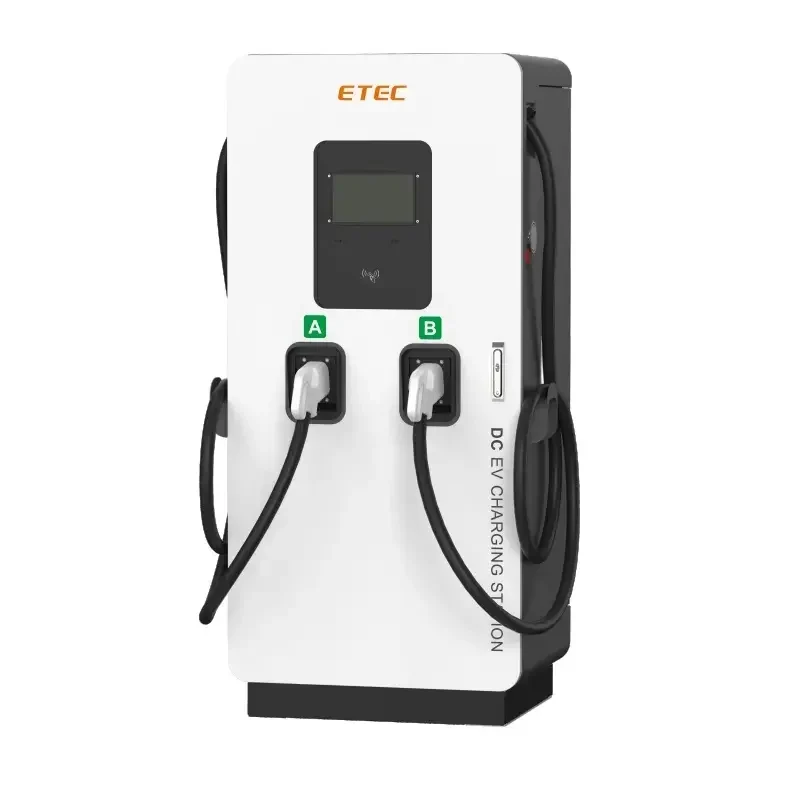
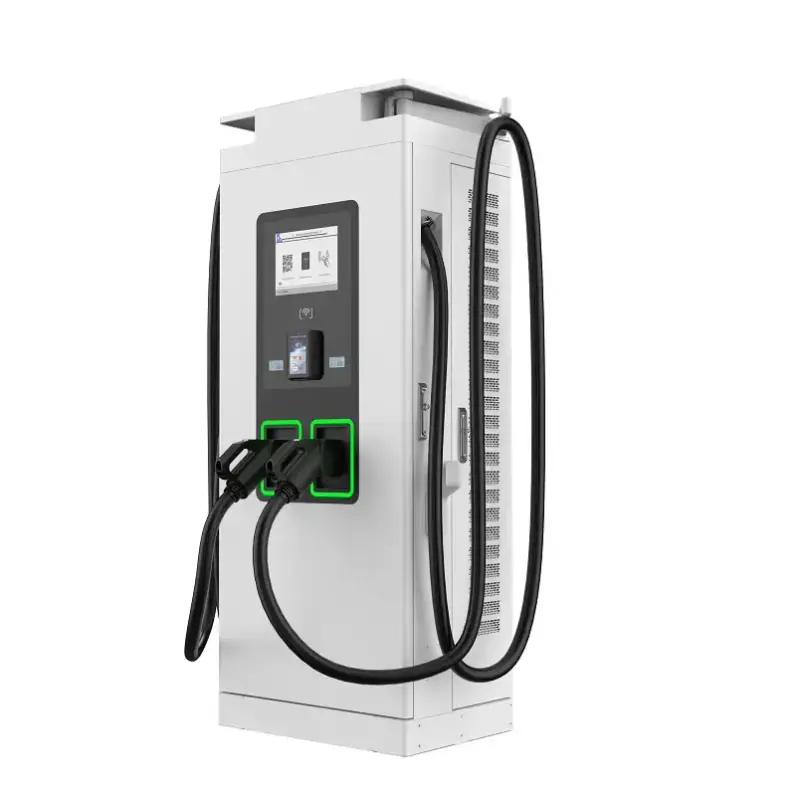
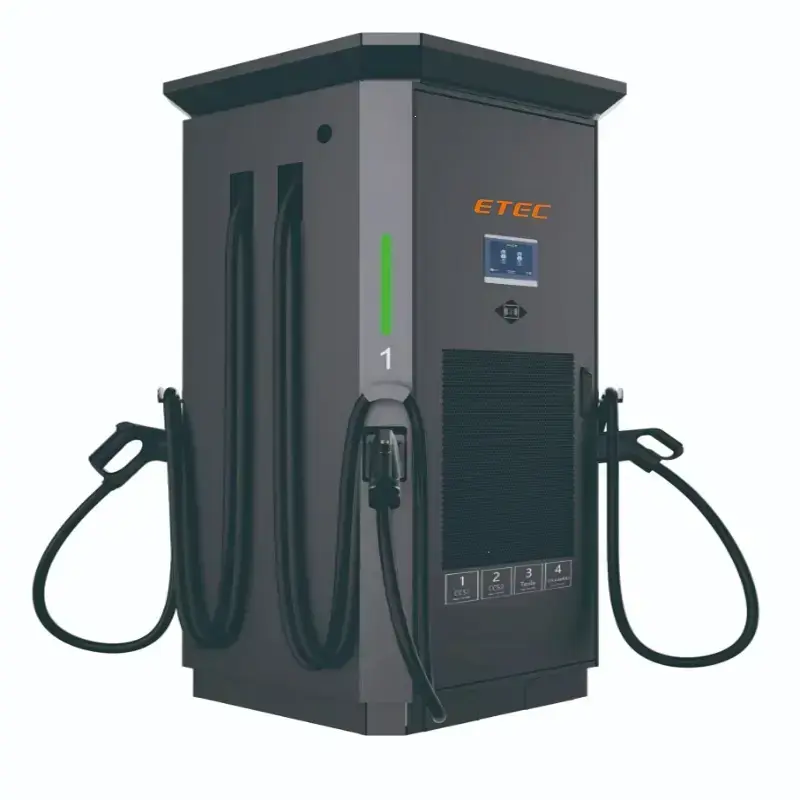
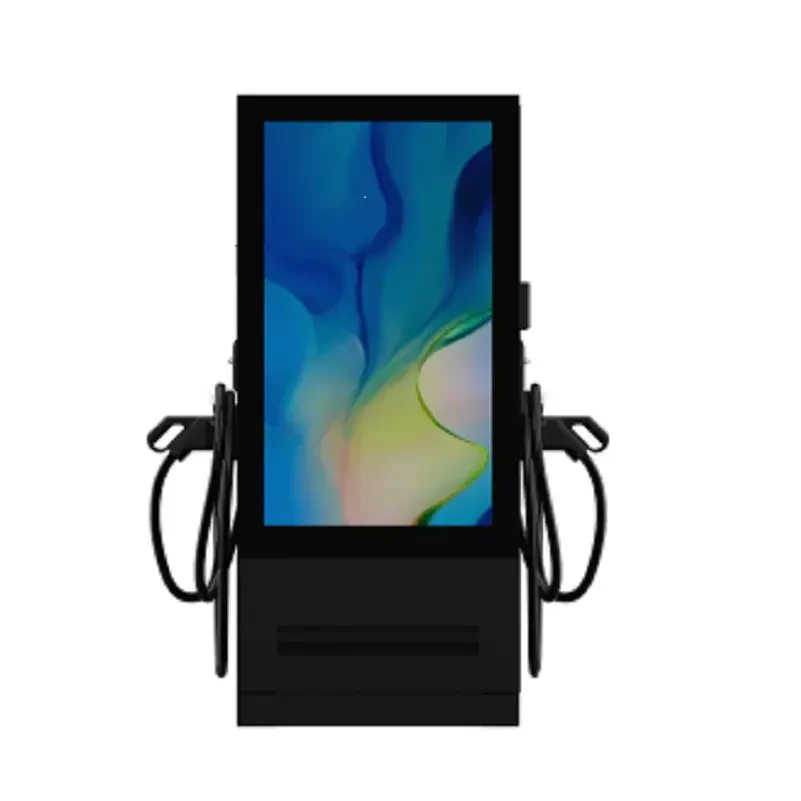
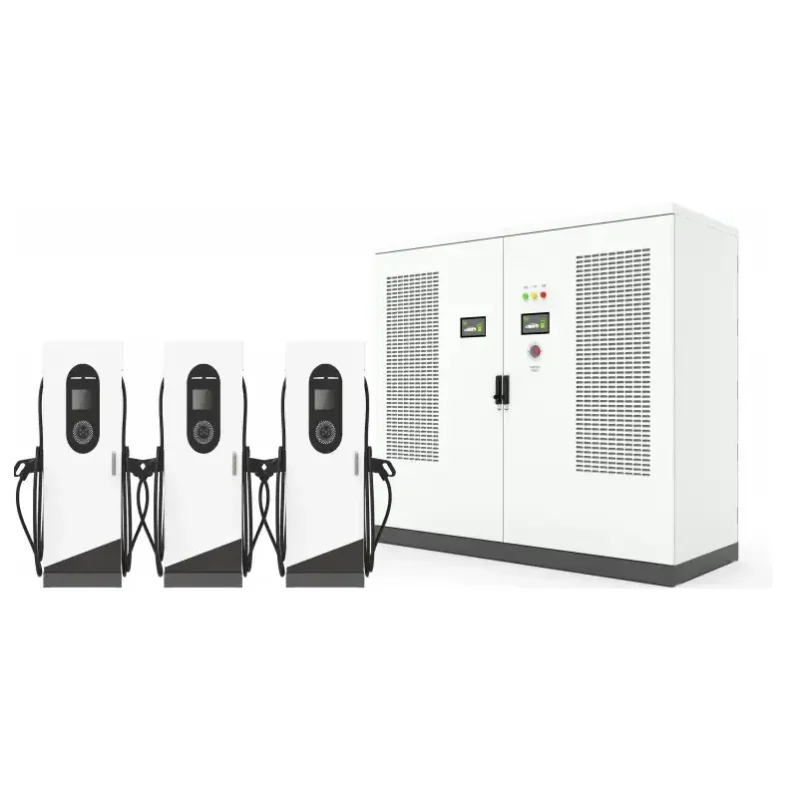
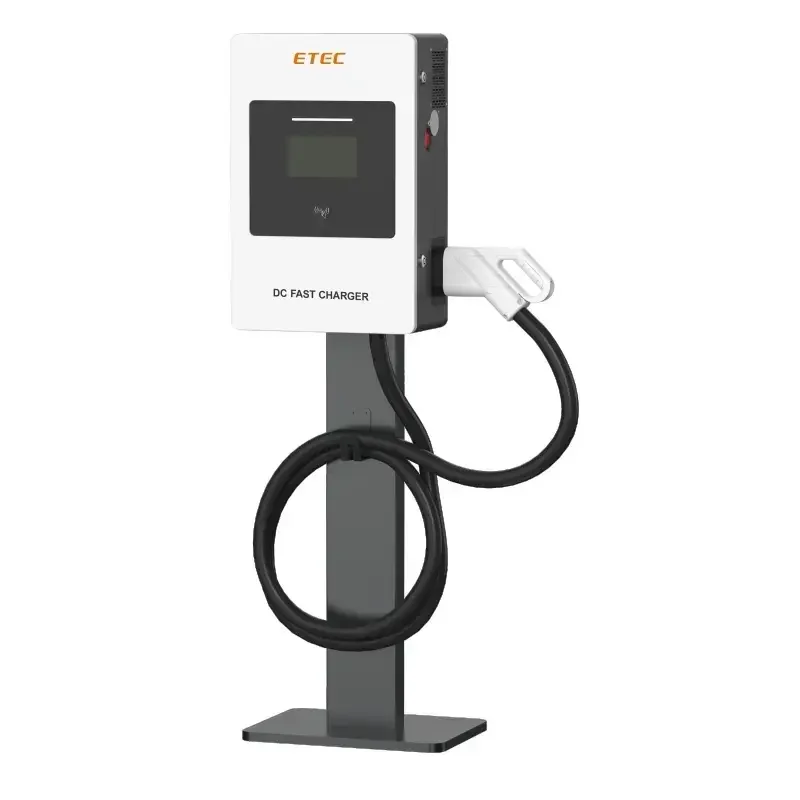
Each charger in this catalogue is designed around one of four deployment profiles: compact single-gun for shops, hotels and low-density parking (EKDC1, 20–60 kW); dual-gun mid-power for retail and workplace hubs (EKDC2 & EKDC5, 60–240 kW); multi-gun high-power for highway corridors and commercial depots (EKDC3 & EKDC4, 60–480 kW, 3–4 guns); and modular split-cabinet ultra-fast for fleet, bus, and heavy-duty applications (EKDC6, 240–600 kW, up to 12 charge points sharing power). Every station accepts three-phase 380–415 V AC input, delivers 200–1000 V DC output for compatibility with all current-generation passenger EVs and light commercial vehicles, and integrates 4G, Wi-Fi, Ethernet and optional advertising displays.
Beyond hardware, ETEK provides full pre-sales engineering support: load-flow analysis for site electrical capacity, connector mix recommendations by target market, OCPP integration guidance for third-party CPO backends (Ampeco, Driivz, Fuergy, EV Connect, Monta and similar), CE Declaration of Conformity documentation, and container-level packaging optimisation. Typical order-to-shipment lead time is 25–45 days depending on customisation. OEM/ODM welcome with MOQ from 10 units for private-label programs.
Frequently asked questions
How much does a 60 kW DC fast charger cost?
A 60 kW DC fast charging station typically costs USD 8,000–16,000 ex-works from a Chinese OEM factory like ETEK, before shipping and installation. The end price to a European or US operator (including sea freight, import duty, EVSE-C compliance labelling, site preparation and installation) usually lands between USD 18,000–28,000. Bulk orders of 10+ units carry a 12–18% discount. Ask us for a project-specific quotation.
How do DC fast EV charging stations work?
DC fast chargers convert three-phase AC grid input (typically 380–415 V) into high-voltage direct current (200–1000 V DC) and deliver it directly to the EV battery, bypassing the vehicle’s onboard AC charger. This lets output power scale to 60 kW, 120 kW, 240 kW or higher — charging a typical 60 kWh passenger EV from 20% to 80% in 20–40 minutes. Communication with the vehicle uses CCS1/CCS2 or CHAdeMO protocols (ISO 15118 for CCS, JEVS G105 for CHAdeMO), and the station reports session data upstream to the CPO backend via OCPP 1.6J or 2.0.1.
How do I install a DC fast EV charging station?
A typical DC fast charger installation has 5 phases: (1) site survey and electrical capacity assessment — verify that the incoming service can supply the required kVA plus 20% headroom; (2) civil works — foundation pad (concrete plinth typically 1.2 × 1 × 0.5 m for units up to 240 kW), cable trenches to the utility feed; (3) grid connection — dedicated three-phase feeder with upstream protection (MCCB, RCD Type B, SPD); (4) charger positioning, cable termination, PE bonding, and firmware provisioning (OCPP endpoint, RFID whitelist, tariff plan); (5) commissioning — dielectric test, ground continuity, first-charge verification. ETEK provides installation drawings, single-line diagrams, and remote commissioning support for all orders.
Which connector should I choose: CCS1, CCS2, GB/T or CHAdeMO?
Match the connector to the target market. CCS2 (Combined Charging System Type 2) is the standard in Europe, UK, Middle East, most of ASEAN, and Australia. CCS1 dominates North America (although Tesla NACS is emerging as a second standard, with a J3400 adapter typical). GB/T is the mandatory standard in mainland China. CHAdeMO remains widely used in Japan and by legacy Nissan Leaf, Kia Soul EV and Peugeot iOn fleets globally. For mixed-fleet public sites in Europe or the Middle East, ETEK recommends a dual-gun CCS2 + CHAdeMO configuration for maximum vehicle compatibility. For North American shipments we can supply CCS1 + NACS J3400.
What certifications do ETEK DC fast chargers carry for export?
All ETEK DC fast chargers are CE-marked under the Low Voltage Directive (2014/35/EU) and EMC Directive (2014/30/EU), with individual model type approvals from TÜV Rheinland or SGS. Additional certifications available on order include CB Scheme (IECEE), UKCA (post-Brexit UK), SASO (Saudi Arabia), EAC (Eurasian Customs Union), and OCPP Test Tool compliance certificates for network integration. IEC 61851-1, IEC 61851-23, and IEC 61851-24 test reports are provided for every unit. RoHS and REACH declarations included in the standard export documentation package.
Do ETEK chargers support OCPP integration with third-party backends?
Yes. All ETEK DC fast chargers ship with OCPP 1.6J firmware as standard and OCPP 2.0.1 available on request. We have verified integrations with Ampeco, Driivz, Fuergy, EV Connect, EVA-EVSE, and Monta CPO platforms. During factory acceptance testing we can pre-configure your specific CPO endpoint URL, RFID whitelist format, tariff plans, and remote start/stop authorisation model. For custom protocol extensions or MSP-specific certifications (e.g. Hubject Intercharge, e-clearing.net) contact our engineering team for a compatibility statement.