What Is a Modular Contactor? DIN Rail Applications and Selection Guide
What Is a Modular Contactor? DIN Rail Applications and Selection Guide
A modular contactor is a DIN rail mounted electrically operated switch used to control a load from a separate control signal. It is commonly specified in low-voltage distribution boards where lighting, heating, ventilation or other circuits need scheduled, remote or automatic switching. This guide explains the selection questions that matter before a modular contactor is specified.
Key Takeaways
- A modular contactor switches a circuit; it is not an overload or short-circuit protective device.
- Start selection with the load duty, pole arrangement, control supply and switching frequency, not the current rating alone.
- Confirm the manufacturer data sheet for the utilisation category, coil details, terminal capacity and installation requirements before ordering or installation.
- For systems requiring protection, coordinate the contactor with suitable upstream protective devices and the applicable local electrical rules.
What Is a Modular Contactor?
A modular contactor is a compact contactor designed to fit on DIN rail inside a consumer unit, distribution board or control enclosure. A control circuit energises the contactor coil, which opens or closes its main contacts to switch a separate load circuit. This separation lets a timer, sensor, building-control signal or manual control device operate a higher-current load without carrying the whole load current itself.
Unlike a miniature circuit breaker, a contactor is primarily a switching device. It should not be selected as a substitute for overload, short-circuit or residual-current protection. The protective arrangement depends on the circuit design and the applicable standards.
Where Are DIN Rail Contactors Used?
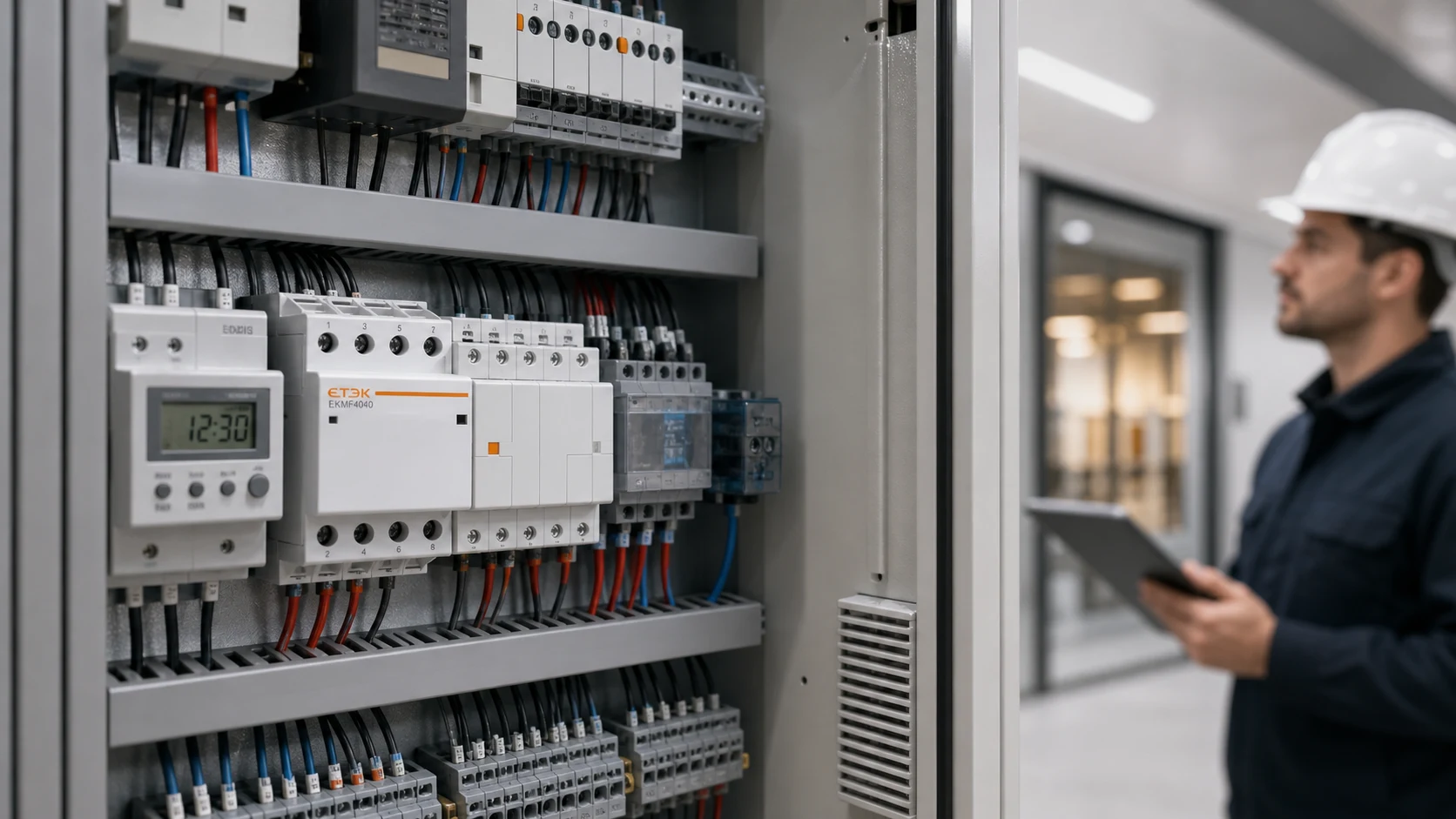
DIN rail contactors are used where a circuit needs repeatable automatic or remote switching from a compact distribution-board format. The exact suitability depends on the contactor duty rating and the equipment being controlled.
- Lighting control: scheduled or sensor-controlled switching of lighting groups.
- Heating and ventilation control: switching loads in response to thermostats, time schedules or control systems.
- Building automation: isolating or enabling circuits through a low-voltage or supervisory control signal.
- Load management: switching non-essential loads when a control system signals a demand limit.
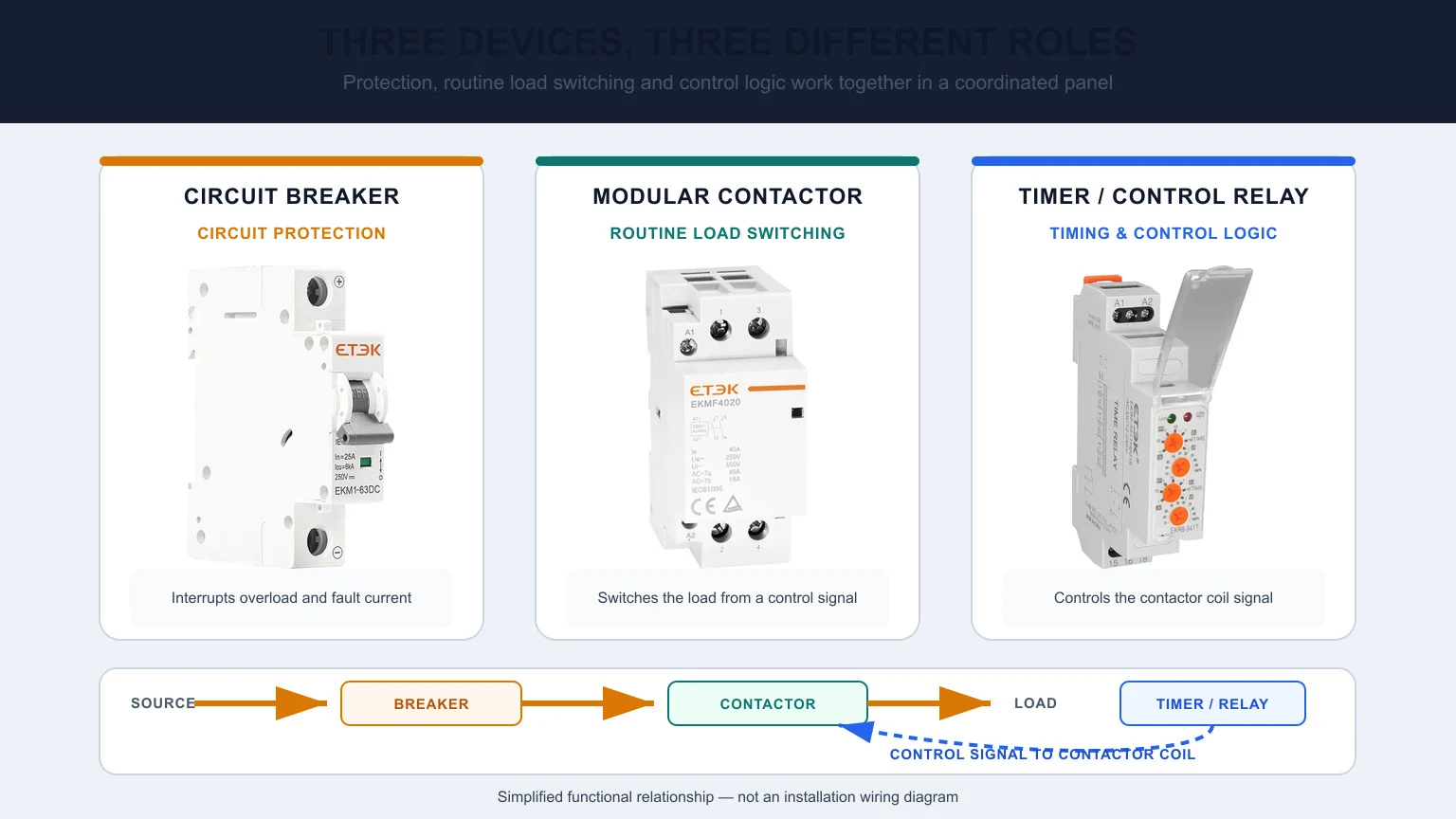
Modular Contactor vs Relay vs Circuit Breaker
| Device | Primary purpose | Selection focus |
|---|---|---|
| Modular contactor | Repeated electrical switching of a load circuit | Load duty, pole arrangement, control circuit and switching frequency |
| Control relay | Signal logic or switching lower-power control circuits | Contact configuration, control voltage and signal duty |
| MCB or other protective device | Protection against overcurrent or fault conditions | Fault protection, current rating, breaking capacity and circuit coordination |
The devices are often used together. For example, a protective device can protect a circuit while a contactor performs its routine switching. The final arrangement should be designed and verified by a competent person for the application.
How to Select a Modular Contactor
1. Define the load and switching duty
Identify what is being switched and how often. Resistive, inductive and motor-related loads can impose different switching demands. Do not assume that two loads with the same nominal current require the same contactor selection. Use the manufacturer documentation to check the applicable utilisation category and ratings.
2. Choose the required pole arrangement
The number of poles must match the circuit isolation and switching requirement. A 2P device and a 4P device serve different circuit arrangements; selection must follow the actual system design rather than a preference for a particular product format.
3. Verify the control circuit
Check the control supply and the device that will energise the contactor. Coil or control-circuit information must be taken from the exact product data sheet, because it can vary by model and market version.
4. Check current rating in context
A current figure is only one part of selection. Confirm the intended duty, ambient conditions, enclosure arrangement, conductor sizing and upstream protection. Derating or coordination requirements may apply in a real panel.
5. Confirm compliance and documentation
For the ETEK EKMF 40A modular contactor range, the product pages state compliance with IEC 61095 and IEC 60947-4-1, a -25°C to +55°C ambient operating range, and NO+NC auxiliary contacts. Verify the exact 2P or 4P model and its current data sheet before final specification.
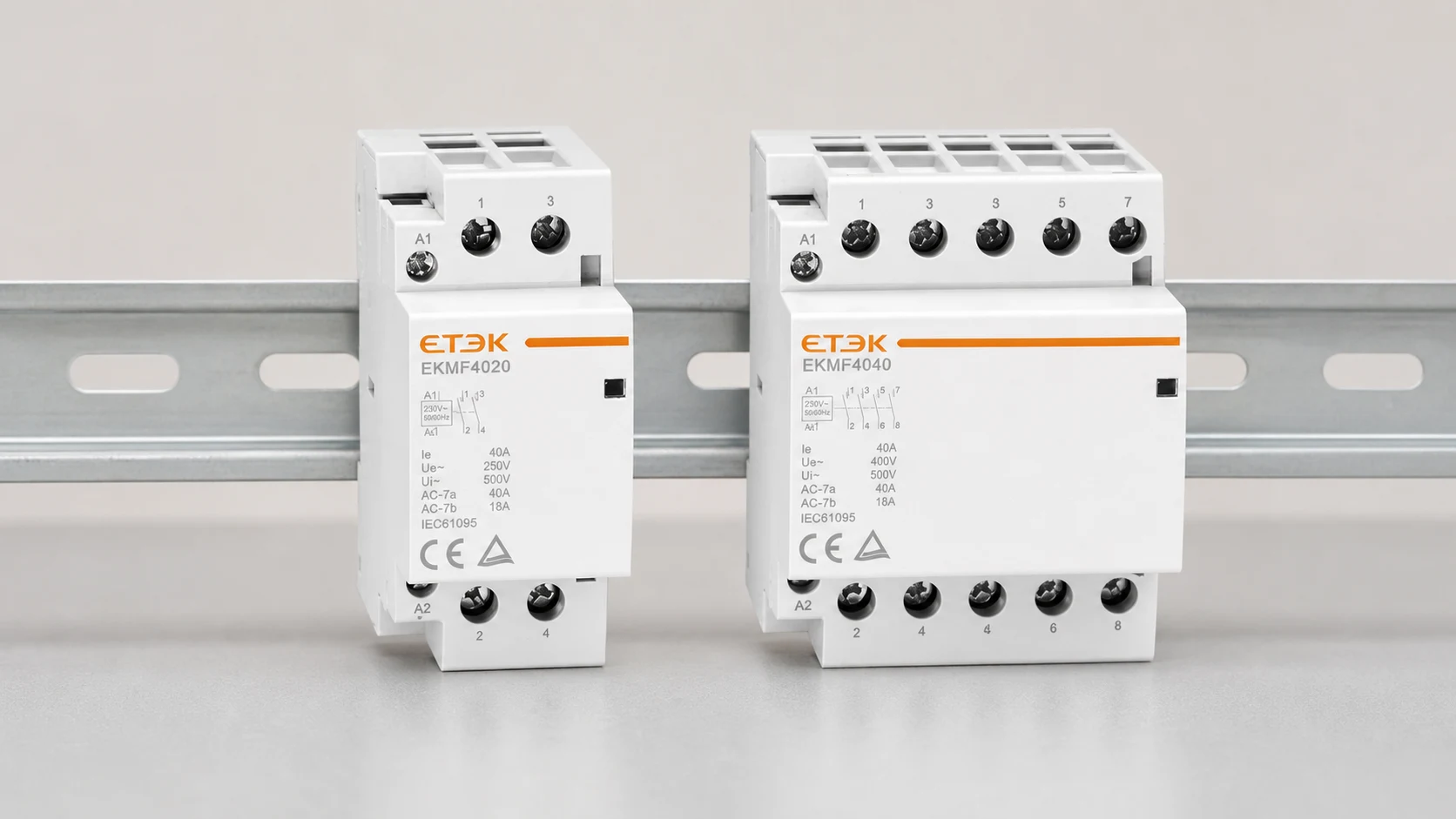
ETEK EKMF Modular Contactor Range
ETEK lists 40A EKMF modular contactors in 2P and 4P configurations. The published product information identifies NO+NC auxiliary contacts and references IEC 61095 and IEC 60947-4-1. These products are relevant to designers and panel builders looking for a modular contactor format; however, the final model selection must be based on the project load, control requirements and the exact product documentation.
Frequently Asked Questions
What is the difference between a modular contactor and a relay?
A modular contactor is generally used to switch a load circuit from a control signal in a DIN rail distribution-board format. A relay is commonly used for control or signal switching. Selection should be based on the exact duty and rating data rather than the name alone.
Does a modular contactor provide circuit protection?
No. A contactor is a switching device. Circuit protection should be provided by appropriate protective devices selected for the circuit and verified against the applicable local requirements.
How do I choose between a 2P and 4P modular contactor?
Choose the pole arrangement according to the circuit design and required switching or isolation arrangement. Do not select pole count only by current rating; verify the system design and manufacturer documentation.
Can a modular contactor be used with a timer or sensor?
It can be controlled by a suitable timer, sensor or building-control signal when the control circuit and device specifications are compatible. Confirm the exact coil or control-circuit requirements in the product documentation.
Conclusion
A modular contactor is a useful DIN rail switching component when control logic must operate a load circuit repeatedly and reliably. A sound selection starts with the load duty, pole arrangement and control circuit, then verifies ratings, coordination and product documentation. For EKMF 2P and 4P 40A options, review the relevant product page and request the current technical documentation for project-specific selection.